
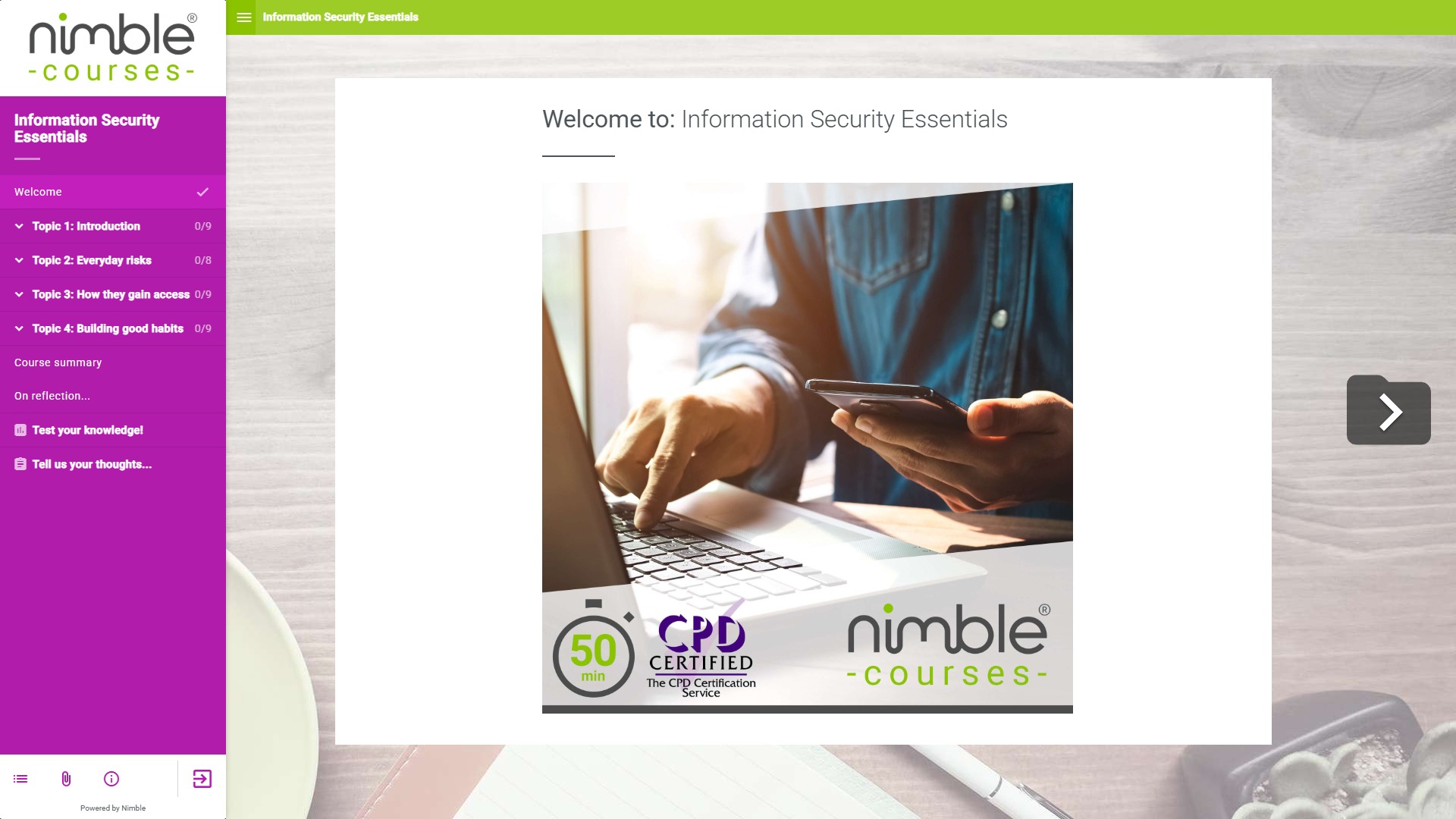
In a world where cyber-attacks are evolving at machine speed, information security has moved beyond the IT department. It is now a daily responsibility for every employee. To meet these shifting challenges, we have completely refreshed our Information Security Essentials course to reflect very real modern risks.
This fifty-minute course has been updated and expanded to address the dynamic way we work today. With a focus on remote and mobile security, learners will discover how to protect sensitive data while working from home, on the go, or in public spaces. New guidance on the safer use of AI tools, phishing and social engineering, will help give your team the practical skills to spot sophisticated scams.
“When I designed this course, I wanted to cut through the jargon and focus on what really helps people day to day. Information security can seem intimidating, but most of the protection comes down to simple habits. My aim was to give learners clear examples, real situations and practical actions they can actually use. By focusing on simple, consistent habits, it helps strengthen the wider security culture across the organisation.” – Rachel, Learning Designer
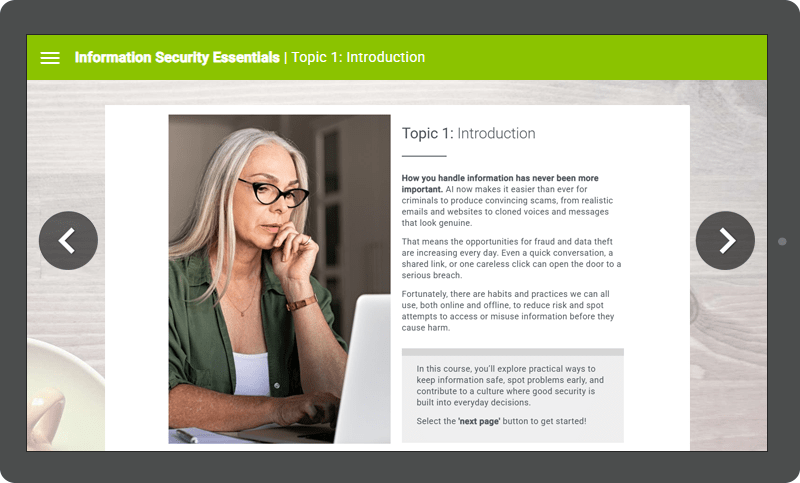
In the first topic, Introduction, we explore how your everyday choices play a vital role in protecting both data and systems, and why even a small lapse can lead to serious personal and organisational consequences. You’ll be introduced to the three core principles of the “CIA Triad”: Confidentiality, Integrity, and Availability, while learning to identify the various types of information that require protection from threats both inside and outside your organisation.
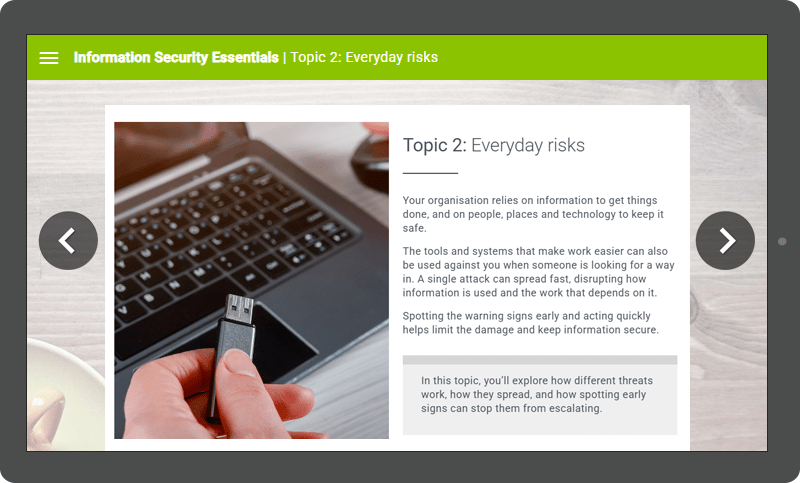
In this topic about everyday risks, we examine how minor physical or digital actions can unintentionally trigger significant security breaches within an organisation. You will learn to identify the various forms of malware, all of which are designed to cause harm, and understand how early warning signs can alert you to a threat before major damage occurs. We also highlight the impact of ransomware, which has the power to lock you out of vital files and disrupt entire systems. By focusing on spotting these risks early and acting quickly, you can play a proactive role in protecting both your individual work and the wider organisation.
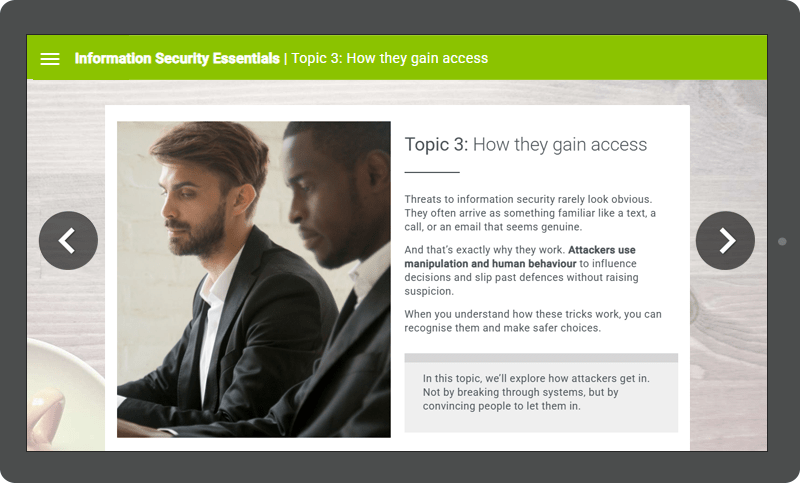
The third topic, about how they gain access, focuses on the psychological and technical methods attackers use to bypass security by exploiting human nature. You’ll learn to recognise common manipulation tactics such as the use of fear, urgency, authority, or trust, designed to trick you into making quick, unsafe decisions. We provide practical guidance on identifying phishing attempts across various channels, including emails, texts, phone calls, and even deceptive search results. Additionally, you’ll understand how attackers use both real and fake work accounts to impersonate trusted colleagues or leaders. Finally, the section highlights the importance of staying alert to in-person threats, such as tailgating into secure areas, physical impersonation, and identity theft.
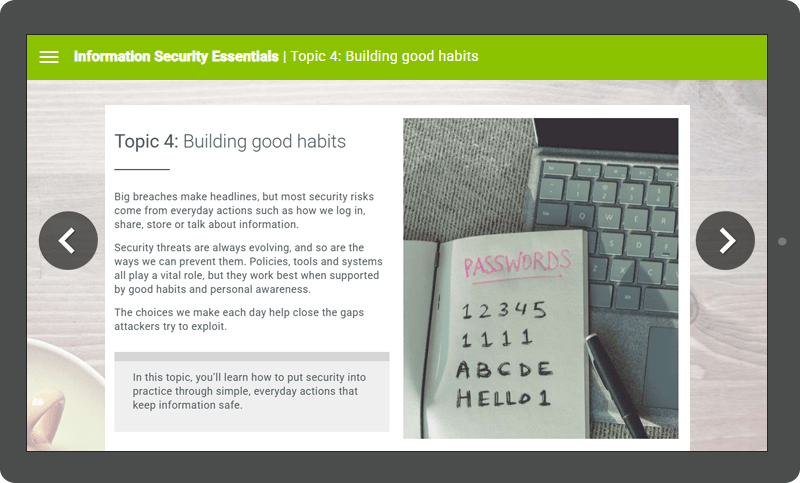
The fourth and final topic around building good habits explores how developing consistent, practical routines is the final and most critical line of defence in information security. You’ll learn to move beyond technical jargon and master everyday habits, such as creating and managing strong, unique passwords and adding a vital extra layer of protection through Multi-Factor Authentication (MFA). We provide clear guidance on handling data safely in all forms, whether you are storing it, sharing it through secure channels, or discussing it in public spaces.
Special focus is given to staying secure while working remotely or on the move. Finally, the topic emphasises that security is a mindset; you’ll learn to recognise concerns that require reporting and understand why acting quickly matters to prevent a minor glitch from becoming a full-blown breach, protecting both your professional reputation and your organisation.
The course ends with a short assessment that checks your understanding of the learning objectives covered.
Information security is about people making confident choices. By focusing on simple, consistent habits, this course helps strengthen the wider security culture across your entire organisation.
If you’re a Nimble+ customer, this course is available to you free of charge as part of your annual licence. Simply contact your Customer Success Manager and ask for it to be added to your account. Like all the courses in the Nimble Essentials range, it is ready to use straight away, or can be edited to match your organisation’s colour scheme or include specific examples for your workplace.
For all other customers, the Information Security Essentials course is £13.99 per learner per year and available from our marketplace here.

0 Comments